On 22 April 2026, we had the opportunity to attend the IDC CIO Summit in Warsaw. This event brings together practitioners – people who, on a daily basis, have a real influence on the direction of technological development within their organisations. As a conference partner, we were present not only during the official sessions, but above all in numerous discussions with CIOs and technology leaders.
Our perspective
Every year, the CIO Summit brings together those responsible for IT strategy, systems architecture and digital transformation. This year’s edition had a clear focus on practical application. Both on the agenda and in informal discussions, the topics that CIOs face most frequently today were a recurring theme: the impact of AI on business decisions, the growing complexity of IT environments, cybersecurity, and technological debt, which is increasingly becoming a real business risk.
A fundamental question arose in many discussions: which technology should be chosen to manage all of this and not lose control in the long term?
Technology Knockout: Strategy in a World of Chaos
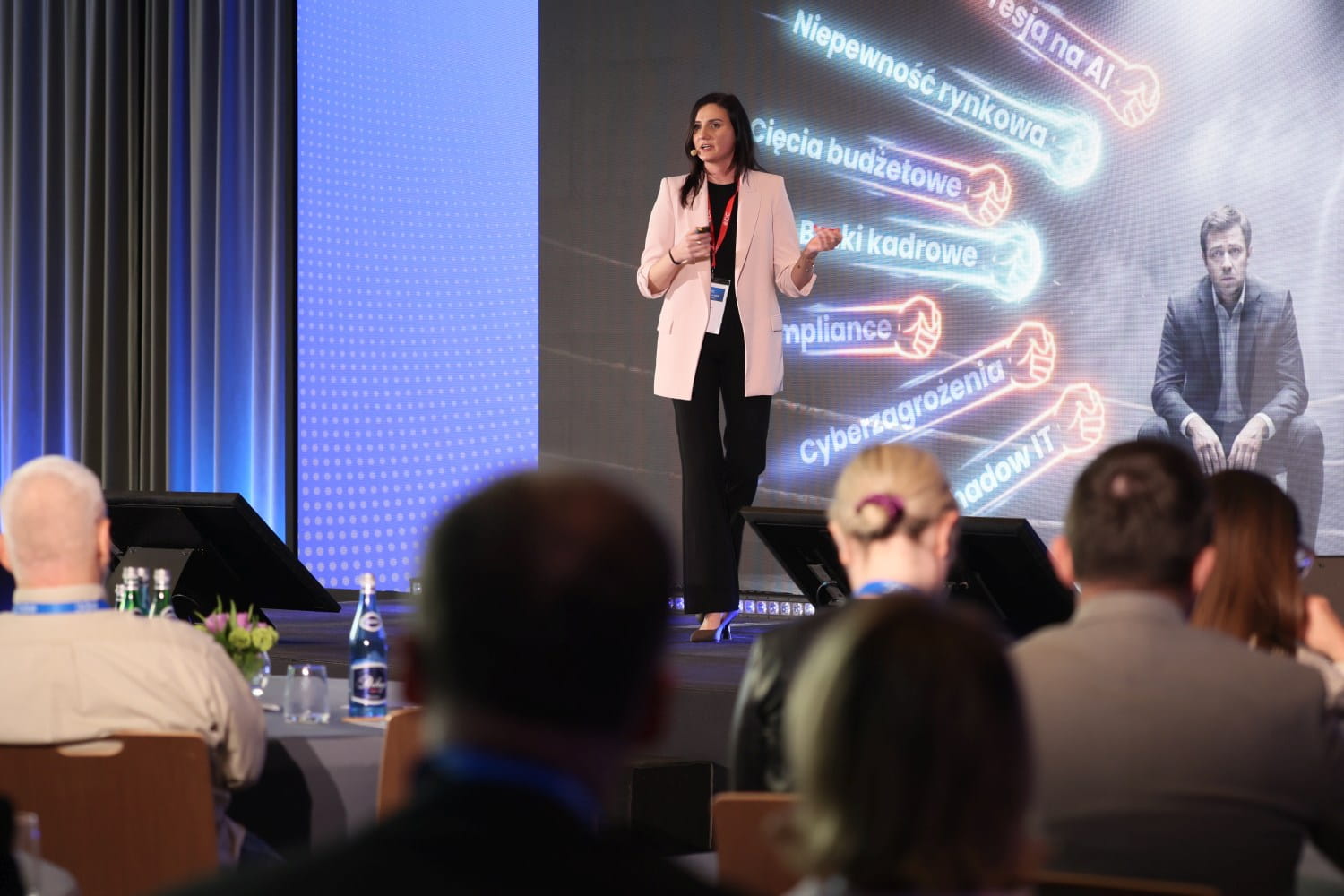
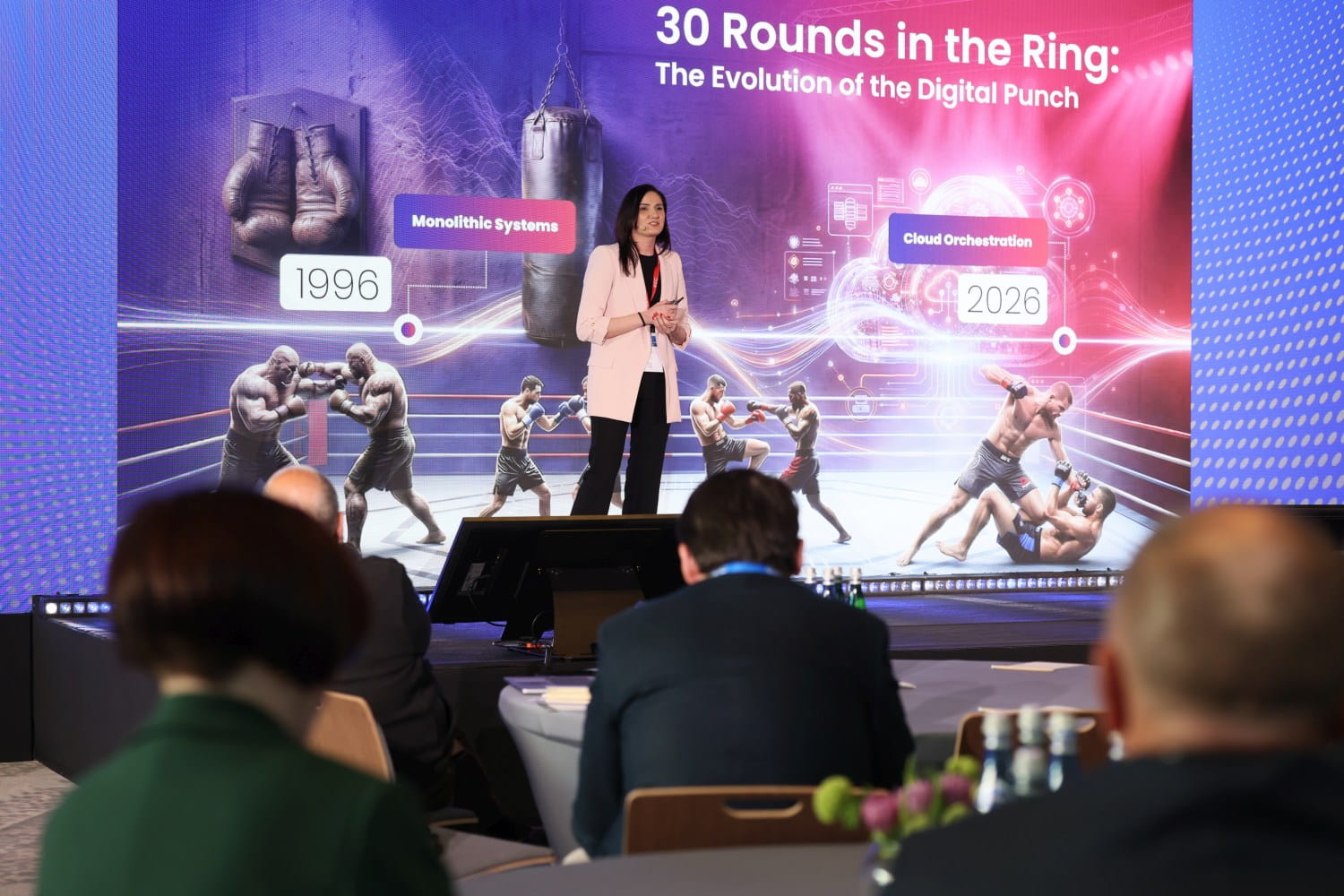
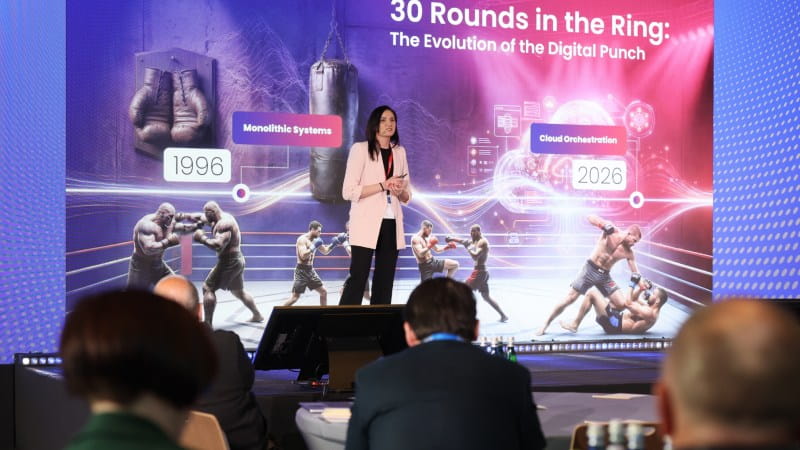
A key highlight of our participation in the conference was Edyta Zborowska’s presentation entitled “Technology Knockout: Finding Strategy in the Chaos”. The presentation addressed the day-to-day challenges faced by CIOs, who operate under intense pressure, grappling with numerous interdependencies and the need to make decisions in conditions of incomplete information.
Rather than talking about “fighting technology”, a simple yet fundamental question was posed: how can we regain real control over IT in a world of growing complexity?
The conclusion was clear: technological chaos is not going to disappear. However, it is possible to learn to manage it. An IT strategy should not be a collection of individual initiatives, but should stem from a coherent architecture and the flexibility of systems. It is these that enable us to identify interdependencies, assess the consequences of decisions and stay on course, even when the environment is changing very rapidly.
Practical insights, discussions and real-world challenges faced by CIOs
A major highlight of the CIO Summit was the discussions taking place off-stage – at the stands and in the corridors. Michał Jurkowski, Milena Kamińska and Paweł Skawiński were also on site throughout the day, talking to participants about streamlining the IT landscape, architectural decisions and building a strategy that makes sense not only today but also in the years to come.
The topic of tools supporting informed architectural decisions frequently arose in these conversations – tools that help maintain consistency and visibility of dependencies amidst a growing number of initiatives. In this context, the archITekt platform was a natural point of reference in discussions on how to develop IT faster, whilst doing so in a controlled and predictable manner.
Our conclusions
The CIO Summit 2026 confirmed that the growing complexity of IT environments has become one of the key challenges facing technology leaders. Today, IT strategy must keep pace with the speed of business change, whilst protecting organisations from architectural chaos and mounting technical debt.
In this context, the role of low-code as a practical response to this complexity is becoming increasingly clear. Not as a tool for rapid application development, but as a means of developing IT in a controlled, consistent and predictable manner. Low-code, embedded within the IT architecture, allows business agility to be combined with technological discipline.
The conclusions from the conference are clear: maintaining real control over IT requires an approach that simplifies change management. For many CIOs, low-code is now becoming the foundation of their strategy, rather than merely a tactical add-on.